Space: The Final Frontier for Standards
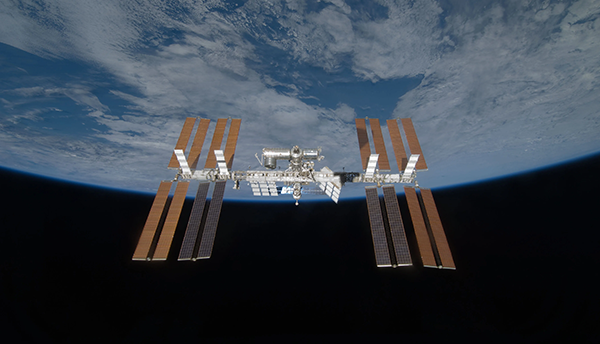
Wrapped snugly in a custom container, seven carefully chosen materials left Earth on Aug. 24, 2025, traveling at 17,500 mph. Nestled at the top of a Falcon 9 rocket, house dust, freeze-dried human liver and cholesterol joined four other scientific specimens to travel to the International Space Station (ISS).
Called reference materials, these thoroughly studied samples serve important roles on Earth — and now beyond.
These reference materials will play a critical role in understanding the effects of outer space on everyday objects as space becomes a place where people live, conduct research and even start new businesses. For example, drug development is already happening in low Earth orbit. As this kind of research grows, so will the need for reference materials.
Getting these reference materials into orbit was a collaborative effort among the National Institute of Standards and Technology, the National Oceanic and Atmospheric Administration (NOAA) Office of Space Commerce and the biotech company Rhodium Scientific. The goal is to advance U.S. leadership in the space sector by supporting the development of innovative commercial and scientific capabilities in outer space. This effort also supports the goals of two recent executive orders on U.S. activities in space.
“Standardizing how we measure biological and chemical changes in space is essential for creating a resilient, self-sustaining ecosystem where research and commerce can thrive,” said Gabriel Swiney, director of NOAA’s Office of Space Commerce’s Policy, Advocacy and International Division. “This mission is a critical step toward a more dynamic and scalable space economy.”
Read more on NIST’s news release.